Together for the edible city
Together for the Edible City: How can food be grown in the city and what opportunities does this offer for start-ups and initiatives? This was the focus of the Edible Cities Network EdiCitNet project. The project was funded by the European Commission. It has been bringing cities together since 2018 to jointly implement Edible City Solutions (ECS).
Borderstep supported EdiCitNet with practical expertise from the Sustainable Entrepreneurship research area. The offer included, for example, workshops on topics relevant to start-ups for the Edible City. The spectrum ranged from basics such as financing or location search to advanced topics such as impact management or staff recruitment and retention.
Consulting for selected organizations and start-ups
The Borderstep research team also offered 1:1 consulting sessions for selected organizations and start-ups. The consulting sessions focused on specific topics such as financing from the public sector. Another focus was on basic questions about sustainable business model development or the use of the Sustainable Business Canvas or Edible City Solution Canvas.
As part of the project, Borderstep developed a range of resources and publications and created a variety of content to support the Edible City start-up scene.
- Growing Jobs in Urban Agriculture Playbook: The GJUA Playbook presents edible city business strategies and shows how to develop a viable business model for your own initiative using the Edible City Solution Canvas tool.
 More
More - EdiCitNet Consulting Guidebook: Many edible city concepts have already been successfully implemented in cities such as Berlin, Oslo, Rotterdam and Andernach. The guidebook presents these and provides an insight into the funding and support available for Edible City entrepreneurs. It also presents exciting edible city initiatives and their business models.More
- Video series “Sustainable entrepreneurship for the edible city”: The four-part series is part of the “Sustainable Business”-module of the EdiCitNet Massive Open Online Course (MOOC) “Making Cities Edible: Cultivating Sustainable Urban Environments”. The MOOC provides interested parties with knowledge about urban food production and sustainable urban development. The business module introduces concepts such as sustainable business model development and impact orientation and provides practical tips for starting your own business in the context of edible cities. Instructions for online registration for the MOOC will be provided. More
Borderstep supported the development of the Edible Cities Network Platform
Supporting the development of the Edible Cities Network Platform was also an important area of activity. The online service sees itself as a global meeting place for sustainable urban food systems. Whether initiative or individual entrepreneur, city official or citizen – we invite everyone to become part of a collaborative network. Community members can become visible with their own profile for their region and find new partners and supporters.
Members can also benefit from the network’s experience. They can use the consulting tool to either seek advice or provide their own expertise and support. The online platform also provides the community with numerous publications, information material and videos as well as tools for design, analysis and planning free of charge.
A Massive Open Online Course (MOOC) “Making Cities Edible: Cultivating Sustainable Urban Environments” has also been developed. It offers interested parties the opportunity to delve deeper into the topic of edible cities.

Join our Book Release: Sun Wind & Wires
Borderstep energy expert Severin Beucker is part of the author team of the recently published 2nd edition of Sun, Wind & Wires. Even under ‘normal’ circumstances, a two-year period would be a small eternity for an energy sector in transition. But what we have witnessed in the past two years is nothing short of a seismic shift.
In such turbulent times, it may seem daring to release a book that aims to remain relevant for years to come. But the response to the 1st edition of this book was so enthusiastic that we were inspired to release an updated version.
After all, the objective of Sun, Wind & Wires is timeless:
We hope to generate interest in the fascinating world of the energy sector and its transition, a goal better served by exploring fundamental principles than by monitoring day-to-day political developments.
These core principles are examined in the first section of this book. It incorporates updates to the original text and graphics as needed. In the second section, we highlight model solutions for a 100% renewable electricity system.
To reflect recent advancements in the energy industry, we have included a new chapter on the swiftly growing hydrogen economy. It replaces chapters that are no longer so relevant.
Book Release: Sun, Wind & Wires
We are releasing the first English and second German edition on Dec. 7th 2023.
Join this event and learn more about the project, our take-aways and the team behind it!
At the launch, the editors, designers and authors will discuss the book. And its inspirations and future opportunities to tell the story of the energy transition.
Click here for more information on the books.
The WindNODE project
The WindNODE joint project was funded by the BMWi as part of the SINTEG funding program. In 50 different sub-projects, more than 70 partners have been working on model solutions for the 100 percent renewable, smart energy system of the future. The Borderstep Institute was also on board as a science network partner.
In a joint effort between WindNODE, the Department of Energy Systems at TU Berlin and Ellery Studio, the first edition of Strom Netz Fluss was then published. A work that makes our energy world understandable to a wide audience.
Research Alliance with ESCP Business School
Borderstep forms a research alliance with ESCP Business School’s Chair for Corporate Sustainability: With increasing sustainability awareness among consumers and industry and tightening regulation of corporate sustainability reporting and management, the question of how to assess and consider the environmental and social impacts of business activities is increasingly becoming a competitive factor. Consideration of sustainability performance and impact is thus not only a must for established companies, but must also be taken into account as early as the product and business model development stage for start-ups and young companies.
At the STARbowl event Impact Business Models: Measure What Matters!, jointly organized by ESCP Business School Berlin and Borderstep Institute for Innovation and Sustainability, we shed light on how impact assessment and management can be successfully integrated into the business model development of start-ups with practitioners, academics and policy makers. STAR is ESCP’s new Sustainability Transformation & Applied Research Centre, which was founded by Professor Florian Lüdeke-Freund and Jan Ehlers in early 2023.
Borderstep has been collaborating with Professor Florian Lüdeke-Freund from ESCP for several years. Founded in 1819, the ESCP is the oldest business school in the world still in existence today. This joint STARbowl event marks the start of an important research alliance between Borderstep and ESCP in the area of sustainability.
Joint practice-oriented research projects
Prof. Dr. Florian Lüdeke-Freund, Professor for Corporate Sustainability at ESCP Business School Berlin and Head of the Chair, and Prof. Dr. Klaus Fichter, founder and director of the Borderstep Institute for Innovation and Sustainability, express their vision to further advance the field of impact measurement and sustainable business model development in joint practice-oriented research projects in the future.
Prof. Dr. Klaus Fichter, founder and director of the Borderstep Institute for Innovation and Sustainability:
In our collaboration with Professor Lüdeke-Freund, we will focus on business model transformation and how impact business models can be effectively supported and scaled. Impact business models intertwine social or environmental goals with core business strategy and ensure that economic and social value creation are combined. Impact business models aim to create what we call a ‘double dividend’: an economic and a social benefit. We bring together two important but previously rather separate areas of research: sustainable business models and the assessment and measurement of business impact. With the new research alliance with ESCP, we are taking sustainable business research to the next level of excellence.
Research alliance to combine two important but yet hardly connected fields of research
Prof. Dr. Florian Lüdeke-Freund, Head of the Chair for Corporate Sustainability at ESCP Business School Berlin, and Academic Director of STAR:
The goal of our alliance is to combine two important but yet hardly connected fields of research. Research on sustainable business models on the one hand, and research on impact measurement and management on the other hand. There are high expectations for the positive effects of new business models on the natural environment and society. But we are lacking tools to measure and manage these effects on the level of business models. Our alliance aims at developing practically useful methods and tools that are based on cutting-edge research.
More: Interview in “The Choice” (ESCP publication) – please click here.
Event: Information & registration
Date & time: November 13, 18:00 – 21:00, registration starts at 17:00.
Venue: Forum, ESCP Business School, Campus Berlin, Heubnerweg 8-10, 14059 Berlin
Language: The event will be held in English. Participation is free of charge. The number of places is limited. First come, first served!
More information: Please click here.
RSVP: To register please click here.
Event: Agenda
17.00 | Registration
18.00 | Welcome
Words from the ESCP Berlin Dean, Prof. Frank Jacob
18:15 | Opening statements
- Professor Florian Lüdeke-Freund from ESCP Business School on Sustainable Business Models.
- Professor Klaus Fichter, Director of Borderstep Institute on Best Practices in Impact Management.
- Lucas Gerrits from the start-up ZukunftMoor will provide inspiration for the subsequent Fishbowl-Discussion and the Moving Impact Forum.
18.40 | Fishbowl-Discussion
Moderation: Prof. Dr. Klaus Fichter, Borderstep, and Prof. Dr. Florian Lüdeke-Freund, ESCP
19.15 | Moving Impact Forum: Find out more and ask questions to our experts
ESCP STAR: At this table, you have a chance to learn more about ESCP’s newest impact initiative, the center’s upcoming events, programs, and activities, and enter into an exchange on topics around research transfer, new educational formats, and community building for practitioners and professionals in the sustainability and impact arena.
Facilitator: Anastasia Shevchenko, ESCP STAR
Impact Community: We will introduce the “Community for Impact Management and Measurement” (CIMM) and its mission to enhance impact competency through networking, research, knowledge transfer, and practical experimentation. We invite everyone to actively participate in building the CIMM Community, as your input and engagement are crucial to achieving our vision of advancing impact management and measurement in Germany.
Facilitator: Dr. Thomas Neumann, Borderstep Institute
Rethinking the Sustainable Business Canvas: At this table, we will discuss and evaluate the Sustainable Business Model Canvas and ask how it can be further developed and improved to serve as a collaborative tool for impact business model design.
Facilitator: Alexandra Widrat, Borderstep Institute
Estimating the CO2 reduction potential of startups: We will gain insight into the GHG & Impact Estimator, a tool designed to estimate the CO2 reduction potential of startups. Using a specific assessment case, we discuss the challenges in the context of Climate Impact Assessment.
Facilitator: Tim Grothey, Borderstep Institute
ZukunftMoor – Impact of wet peatlands: We are a startup specializing in agriculture on wet peatlands. Through the cultivation of each hectare, we annually mitigate 40 tons of CO2. Join us in discussing how we manage our impact.
Facilitator: Lucas Gerrit, Start-up ZukunftMoor
Making climate protection investable for startups: Borderstep, together with ImpactNexus and SDG Investments, is developing highly automated tools for assessing the climate protection and sustainability potential of start-ups. How can you go beyond reporting? How can you create a positive impact?
Facilitator: Dr. Constanze Trautwein, ImpactNexus (Borderstep Research Fellow)
19.45 | Closing statements
20.00 | Get together and networking
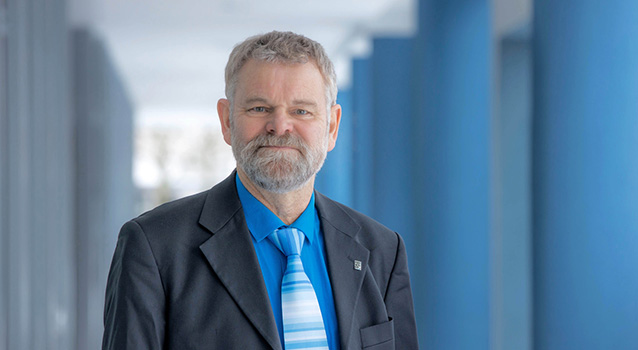 © Thomas Deutschmann
Heat pumps way out of gas dependence
Borderstep co-founder Dr. Jens Clausen is co-author of a study on heat pumps presented by ScientistsForFuture just in time for the global climate strike. It shows in a model calculation that Germany can find a quick way out of gas dependency with this technology.
Modern heat pumps are technically mature and can be installed directly in the majority of buildings within about three days without major modifications. This saves time and, above all, costs. (Jens Clausen)
Just in time for today’s global climate strike, an analysis on the supply of heat by gas appears in the scientific magazine “Nature Communications Earth & Environment”. The study proves that replacing gas heating systems with heat pumps reduces gas consumption the fastest. An interdisciplinary team of scientists from Scientist for Future (S4F) have shown in a detailed model calculation that Germany can reduce in only three years up to 60% of the gas volume that was previously covered by Russian gas.
Problem Skills shortage
The team has calculated a viable change in heat supply and, for the first time, also relied on interviews in craft enterprises. The first problem to arise is the shortage of skilled workers. The 380,000 employees in German plumbing and heating companies install about one million heaters each year, an average of only about three heaters per employee per year. But: out of 50,000 companies, only 10 to 20 % regularly install heat pumps. An important control variable is therefore the approximately 5-day and obligatory further training for craftsmen, so that they can install the heat pumps.
According to the study, a prerequisite for the necessary speedy installation of heat pumps is the cooperation between the government, specialist companies and customers, which has already begun. The main author of the S4F study is Dr. Pietro Altermatt, head of the international energy modeling group “gpvsim”, Hannover. Political indecision is delaying climate protection, he said.
With heat pumps, we can use the virtually unlimited heat potential of the outside air instead of burning limited and expensive gas reserves. The companies need political planning security for this. (Pietro Altermatt)
He is supported by S4F member and co-author Prof. Dr. Claudia Kemfert from the German Institute for Economic Research.
A greatly accelerated replacement of gas boilers with heat pumps is also the right economic response to the energy crisis. We will continue to be financially burdened by fluctuating gas prices in the future.” In addition, he said, the switch offers a realistic solution “for the German government to do without long-term gas supply contracts, because these undermine the Paris climate agreement. (Claudia Kemfert)
Heat supply core energy issue
For private households, heat supply is the core energy issue. The detailed calculations of the S4F research team are based on the current state of thermal insulation in existing buildings. Radiators are also expected to remain installed in most buildings.
The critical point remains the energy issue: heat pumps need electricity and are only climate-neutral if this electricity is green. Therefore, heat pumps are in competition with other users for sustainably generated electricity. However, the study’s calculations show that despite heat pumps, enough renewable electricity remains available to continue phasing out coal and moving into e-mobility. Although some gas-fired power plants will supply electricity for heat pumps on some dark, windless days in winter, the switch will avoid gas-related emissions of more than 180 million tons of CO2 by 2025, according to the calculations.
Although the model analysis examined Germany, it is methodologically transferable to other countries.
Article published in Nature
The paper can be found at Nature Communications Earth & Environment at: Pietro Altermatt et al. (2023). „Replacing gas boilers with heat pumps is the fastest way to cut German gas consumption“.
Borderstep supports EU Commission on the topic of data centers
Borderstep supports EU Commission on the topic of data centers: In the DCESS project for the European Commission, Borderstep, together with VVA Brüssel, AIT Austrian Institute of Technology, Prof. Catherine Banet and RP Legal & Tax, is investigating the environmental impact of data centers in close cooperation with the Directorate-General for Communications Networks, Content and Technologies (CNECT). How can data centers be more effectively integrated with energy networks?
The DCESS-project is an important step towards achieving the goals of the Green Deal and the EU Commission’s Digital Decade. This is intended to drive the digital transformation of the European Union. Among other things, data centers are to become energy-efficient and climate-neutral by 2030.
Smart City: How can development be managed?
In a recent article for the Israel Public Policy Institute, Borderstep co-founder and senior researcher Dr. Severin Beucker looks at the state of the debate on the topic of Smart City in Germany. Ambitious technical visions dominated the projects.
For example, projects dealt with the use of networked sensors and applications such as motion and traffic control cameras. The collection of data on energy and water consumption in buildings to improve municipal services and utilities was also in demand. In the process, the individual benefits for people often came up short in the subjective perception; fears of data misuse dominated the debate for this reason as well.
Overview of smart city solutions in Germany
How has this situation changed? What role do the profit interests of companies play in this? Which pilot projects for the smart city have been successful? How are cities such as Berlin positioning themselves? How does this work in the interaction of the players? Severin Beucker sheds light on concrete examples from various sectors and regions.
The article can be read free of charge.
The Israel Public Policy Institute (IPPI) is an independent non-profit think and do tank based in Tel Aviv with representations in Berlin and New York. With our global network of experts and partners, we strive to foster fresh thinking on how to tackle some of the most pressing policy challenges of the 21st century from within an international and interdisciplinary perspective.
 © jordan mcqueen - unsplash
How big is the greenhouse gas footprint of ICT?
How big is the greenhouse gas footprint of information and communications technology? Which effects does the information and communication technology sector have on greenhouse gas emissions? Borderstep Institute senior researchers Dr. Severin Beucker and Dr. Ralph Hintemann co-authored an article in the journal Environmental Impact Assessment Review.
The text systematically compares relevant studies from the last ten years and discuss the robustness of results in view of the methods used. The paper is based on the project “Climate protection through digital technology” conducted by the University of Zurich and the Borderstep Institute on behalf of Germany’s digital association Bitkom.
The comparison of different studies shows that:
- The information and communication technology sectors accounts for around 1.5% to 4% of the global greenhouse gas emissions.
- The production of end-user devices accounts for most of the greenhouse gas emissions.
- ICT applications have great theoretical potential for avoiding GHG emissions.
- Most studies do not consider rebound effects; it remains open how the potentials can be realized in real-life setting.
More information on the project (in German) you find here.
Author team
Dr. Jan C.T. Bieser I University of Zurich; Gottlieb Duttweiler Institute
Dr. Ralph Hintemann I Borderstep Institute
Prof. Dr. Lorenz M. Hilty I University of Zurich
Dr. Severin Beucker I Borderstep Institute
The article can be accessed free of charge
Founder platform: Borderstep develops “green” offer
The issue of sustainability is becoming increasingly important in the development of new business ideas and models. In order to support those interested in founding a business in dealing with climate protection and other sustainability aspects at an early stage, the founder platform is further developing its knowledge and consulting services. Borderstep supports the development of the offering specifically for green start-ups.
The founder platform aims to make it easier to start a business and encourage more people to do so. The free, digital service is designed to guide founders step by step through the start-up process. And help them navigate through information and funding opportunities in an organized manner. The platform is a service of the Federal Ministry of Economics and Climate Protection (BMWK) and KfW Bankengruppe.
As part of its collaboration with the founder platform, Borderstep is designing new knowledge offerings, guides and learning formats specifically on the topic of green startups. Additional support and consulting formats offer personal and individual support to develop green ideas and business models.
In this way, founders should be enabled to develop their projects sustainably by means of new knowledge and competencies. And to create a positive ecological and social impact using entrepreneurial methods.
Offers for green start-ups on the founder platform
- Green startup – online seminar
In this start-up seminar, people interested in starting a business will learn how to successfully become an Ecopreneur and start a green business. The free seminar consists of 5 modules with 18 lessons. - The green start-up café
In the green start-up café, people interested in starting a business meet online in a relaxed atmosphere to exchange green ideas or discuss challenges in the start-up process. Borderstep moderates and answers questions. - Green business model talk
The online talk offers the opportunity to ask questions about the green business model in a small group. In an open exchange with Patrick Stähler and the other participants, people interested in founding a company receive answers, feedback and inspiration. - Mentoring for green start-ups
Shaping a future with a green business idea in which we operate in a sustainable, resource and environmentally friendly way? Through discussions, guidance in the start-up process and a great deal of experience and knowledge transfer, mentoring helps you to make the right decisions for your own business.
Borderstep is supporting member of the European Green Digital Coalition
The Borderstep Institute has been a supporting member of the European Green Digital Coalition since December.
The European Green Digital Coalition (EGDC) is a business initiative supported by the European Commission and the European Parliament. It stems from a call by the EU Council to harness the emission-reducing potential of digital solutions for all diverse sectors.
Green and digital transformation of the EU
The EGDC was founded in March 2021 by the CEOs of 26 ICT companies. They signed a declaration in support of the EU’s green and digital transformation. The declaration recognizes the ICT sector as an important player in the fight against climate change. The signatories pledge to contribute to the success of the green digital transformation in the EU and beyond.
Borderstep supports EGDC Working Groups
In the EGDC, the Borderstep Institute supports, among others, the working groups that discuss, for example,
- how avoided emissions of a digital technology can be accounted for
- how the emissions caused by a digital technology can be accounted for.
To this end, Borderstep regularly participates in discussion groups free of charge and contributes its case studies and experience from many years of research in the field of digitisation and sustainability.
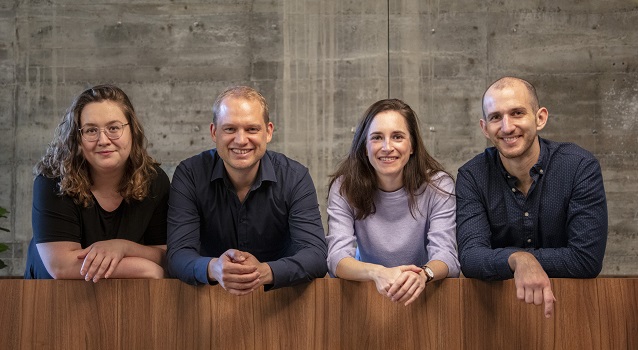 © Alexander Schabel - ImpactNexus
Borderstep spin-off closes financing round
The Borderstep spin-off ImpactNexus has now successfully concluded its first round of financing.
Reliable assessment of the ecological and social impacts of companies is becoming increasingly important. And is one of the research priorities of the Borderstep Institute. This requires reliable data and smart tools for investors and companies alike. These are provided by the Borderstep spin-off ImpactNexus. ImpactNexus.io has now closed its first financing round of 800k€. This will allow it to fully pursue its growth targets for 2023.
The start-up offers sustainability reporting and impact management solutions. The target group of the offering is primarily venture capital and private equity portfolio managers.
ImpactNexus was developed in close cooperation with the Borderstep Institute for Innovation and Sustainability as a spin-off. Borderstep founder and director Prof. Dr. Klaus Fichter supports the project as shareholder and strategic advisor.
Background
The financing industry is currently facing a major challenge: the EU’s Sustainable Finance Disclosure Regulation (SFDR). According to this regulation, providers of financial products must submit an annual report by June 2023 for the first time on how they incorporate sustainability into their decision-making processes for their financial products and what impact they have on the environment, climate and society. The more sustainability-oriented a fund is, the higher the reporting requirements. This leads to high costs and effort for many providers. In addition, there is often a lack of know-how and an effective data flow between the various stakeholders in their portfolio.
10 x less time and cost to achieve sustainability goals
ImpactNexus develops innovative software-as-a-service solutions for this purpose. The goal is to reduce time and costs for sustainability reporting and optimization measures by a factor of 10.
This includes the option to query sustainability data from portfolio companies with just a few clicks and to generate SFDR reports in accordance with the official guidelines of the European Commission. The growing NEXUS database enables an automated assessment of the impact of portfolio companies and additionally provides tailored suggestions for optimization.
Dr. Jannic Horne, CEO of ImpactNexus: “With our digital solution, fund managers can assess the social and environmental impact of their portfolio and efficiently report to their diverse stakeholders while optimizing sustainability performance.”
Vision: Sustainability management for medium-sized companies
With an experienced team of sustainability experts, software developers and data scientists, ImpactNexus is also targeting medium-sized businesses in the medium term. These companies suffer greatly from the lack of sustainability consulting. Access to the NEXUS database potentially offers them an efficient, digital way to optimize their sustainability performance.
The assessment and measurement approaches of the ImpactNexus software are thereby based on the latest academic research and international best practices such as the Impact Management Project, IRIS+ or DIN SPEC 90051-1, a German ISO specification co-developed by Borderstep and the ImpactNexus team. Dr. Constanze Trautwein led the development of “DIN SPEC 90051-1: Standard for the Sustainability Assessment of Start-ups” for Borderstep and is part of the founding team of ImpactNexus.
Dr. Constanze Trautwein, Chief Product Officer ImpactNexus, Borderstep Research Fellow: “The Borderstep Institute supported us as a founding team with practical and scientific elements even before the start-up. This gave stability to the founding process and embedded ImpactNexus in a strong network right at the start.”
Sustainable business = future
The capital from the financing round will now be used for further product development. Investors such as Vireo Ventures, the female investor network encourageventures, and other business angels and funding providers participated in the round.
Jörg Walden, investor and advisor to ImpactNexus, has himself already founded companies in the context of compliance and sustainability reporting, including iPoint and CircularTree.
Jörg Walden, Serial Entrepreneur, Investor and Advisor ImpactNexus: “The future belongs entirely to companies that act sustainably, i.e. climate-neutral and in the spirit of the circular economy. ImpactNexus, with its database and software solutions, offers an important building block to achieve sustainability goals faster.”